Kindoc AI
Designing an AI-Powered Medical Checkup Chatbot
Overview
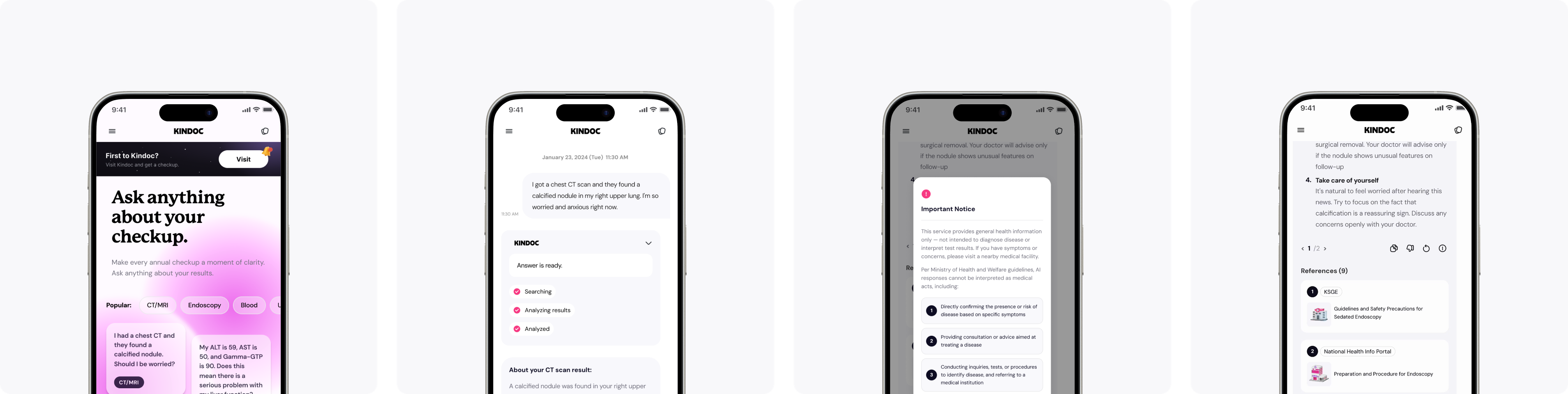
Kindoc AI helps users navigate the medical checkup journey. I led end-to-end UX and interaction design — defining the chatbot's role, IA, and key interactions, and working closely with our AI engineer to shape what the chatbot should be.
Background
Users struggled throughout the entire checkup journey
We've consistently received feedback that users are not familiar with the terminology used in medical checkups. This has also increased the workload for our CX team.
Tap or hover a point for what happens there
ROOT CAUSE
People can't really tell which checkups they need on their own — mostly because the terminology is unfamiliar and it's not clear what each one actually involves. So they keep reaching out to the clinic and CX team. It looked like something users should just figure out themselves, but it turned out to be a real load on our CX team too.
OPPORTUNITY AREAS
Build something that helps people make sense of the medical terms on their own — so they don't have to call the clinic or CX team just to understand what they're looking at.
Problem Keyword Finding
Low medical literacy hindered AI engagement
User feedback showed unfamiliarity with medical terms. I hypothesized this literacy gap would block AI engagement, and defined 'Limited medical literacy' as the core problem keyword.
TWO MOMENTS → ONE ROOT → TWO COSTS
“Whoa, there are so many checkups — I’ve never even heard of most of them.”
“I heard a quick explanation from the nurse, but I still wasn't sure — so I called to double-check what I'd heard.”
Low medical literacy
They can't act on their own — not even sure what to ask.
Every unanswered question lands on the CX team.
Because users don't even know what to ask, we later seeded the chat with sample questions — turning a blank prompt into an obvious first step.
How Might We
Improve the overall checkup experience using an AI chatbot?
After summarizing the project background, I raised a How Might We question to clarify the project goal.
Design a conversational AI that supports users in understanding their health even when they don't know what to ask?
Desk Research
Researching AI capabilities and chatbot patterns
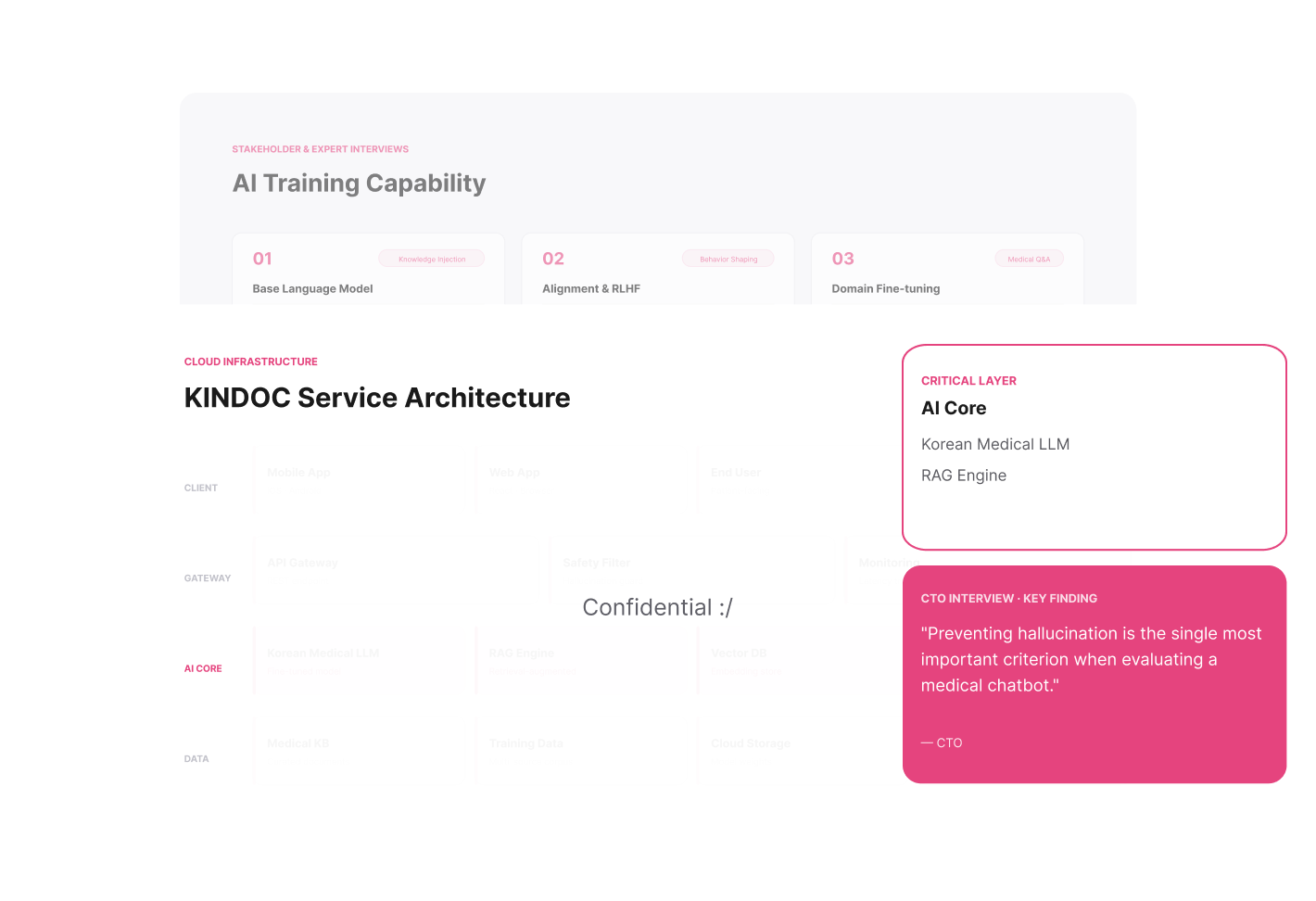
I conducted stakeholder interviews to understand our technical scope, then did competitive research on chatbot products to study proven UX patterns.
Stakeholder & Expert Interviews
To know what our AI Capability can provide
The interview helped me map the full chatbot journey and identify hallucination prevention as critical for credibility, shaping key features for users with limited medical literacy.
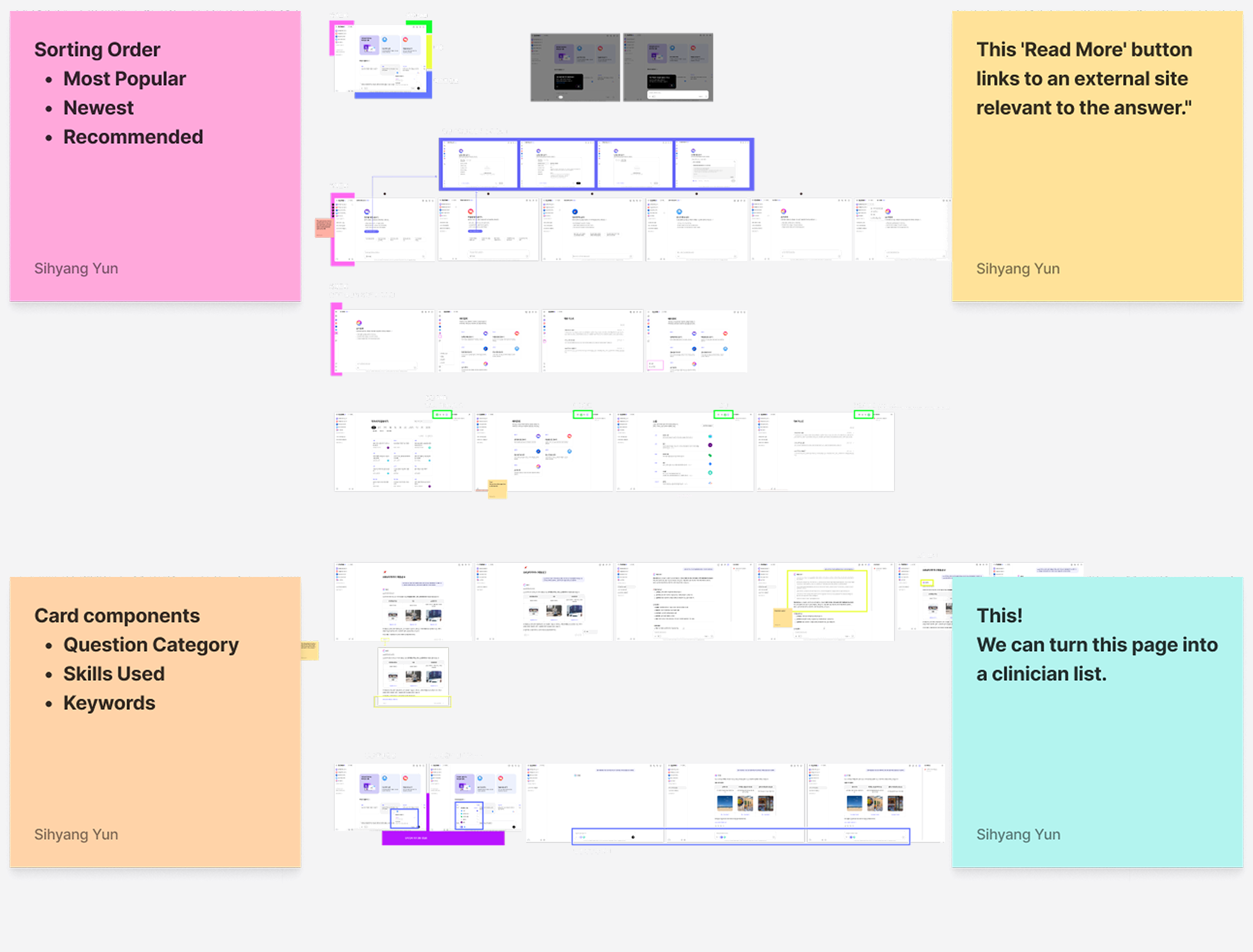
Competitive & Pattern Research
Defining Interaction Patterns to Adopt and Avoid
I analyzed how competitors structure onboarding and guide users through conversations. This shaped my approach to reducing blank-state anxiety and building a confidence-building flow.
UX Design Principles
Set up Principles and then iterated design.
I established core UX principles and made UI decisions throughout the entire journey in alignment with them.
-
Guided example prompts
Give people a way in when they don't know what to ask — the blank prompt becomes an obvious first step.
Applied in — Final Delivery · Easy Start -
Follow-up tags
Using backend data, the system offers up to five related questions so the thread keeps going after the first answer.
GROUNDED IN Both were scoped against data collected from five large companies — function-call coverage and result-sheet upload success rate.
Information Structure
Structured IA that meets both user and business sides.
The product started as a simple chatbot, but expanded to include educational content and clinic bookings. I carefully structured the IA to balance the core mission with business goals.
*external landing
Final Delivery
Equally provide great experience to every user.
Impact
Impact
These changes lowered the barrier to starting a conversation, made checkup results easier to understand, and left behind a reusable interaction framework for future healthcare AI services.
User Engagement
Reduced friction at the conversation-starting step. Improved usability and engagement of the result-interpretation features. Established a reusable interaction framework adopted by later healthcare AI services.
Business Expansion
Started as an internal R&D project and officially launched as Kindoc AI. Expanded into a Pro version, forming a product lineup. Adopted into the B2B2C checkup platform and a hospital-facing follow-up monitoring solution (PMS).
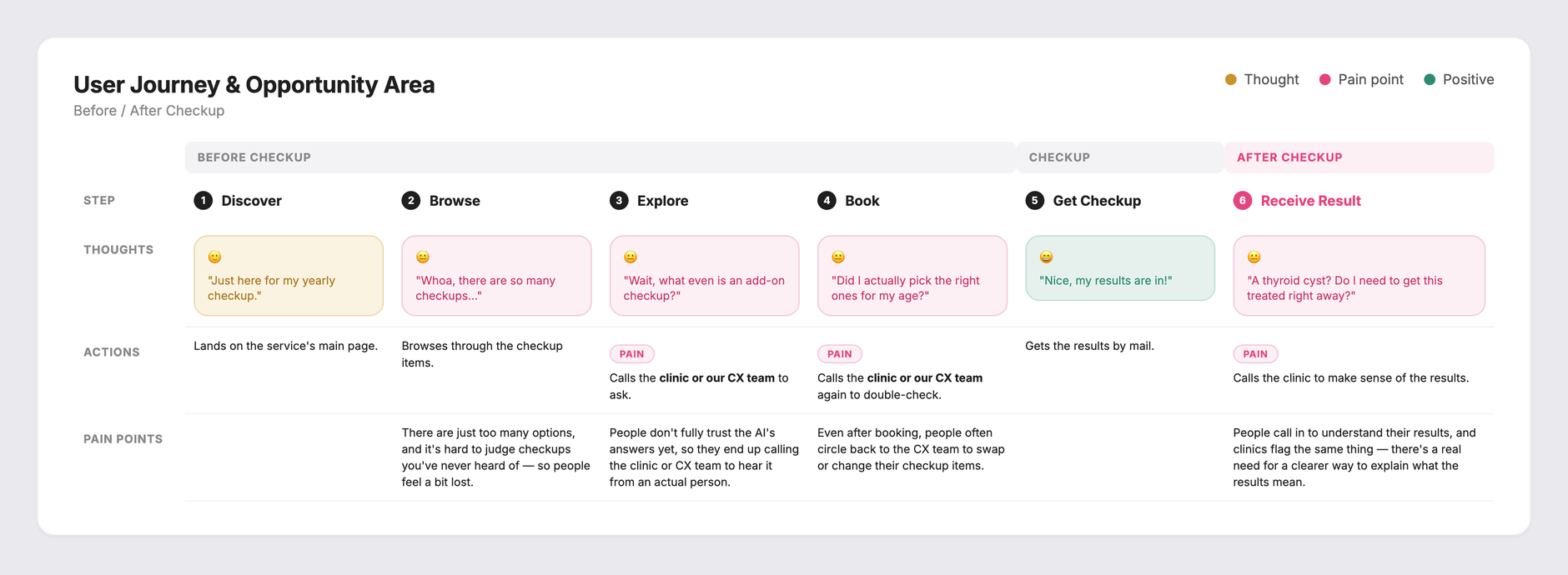
This User Journey Map is made based on interview with CX team lead.